
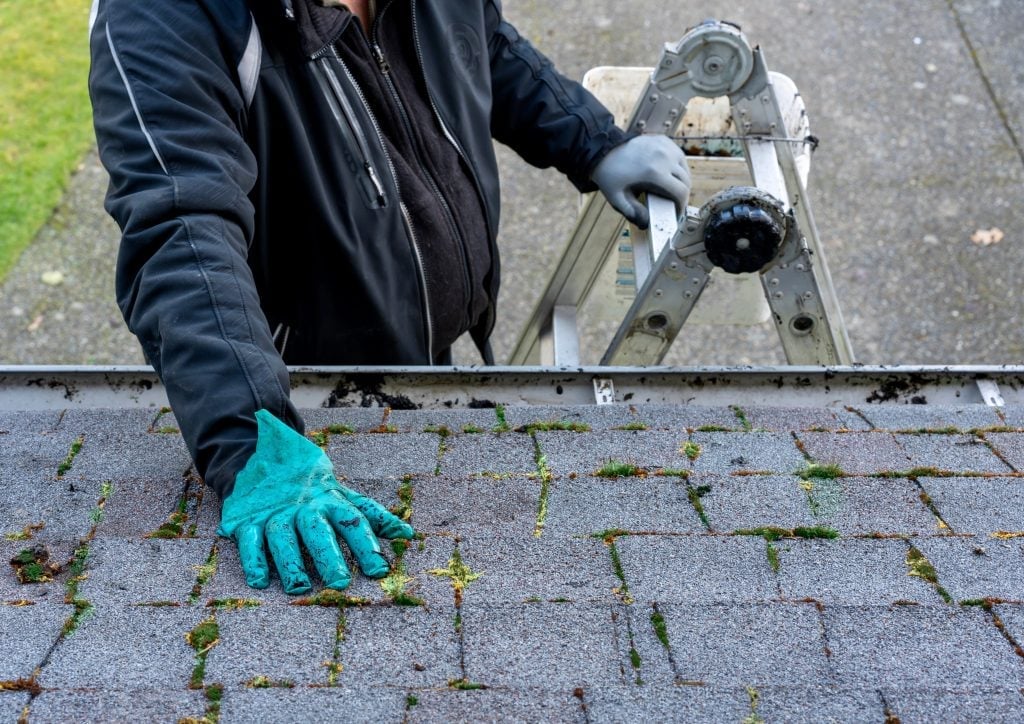
We’ve already been up on a handful of roofs this month, and honestly — this winter was rougher than most. That stretch in January where we bounced between 45 degrees and single digits for two straight weeks did a number on a lot of shingle roofs around the Seacoast. One house in Exeter had three courses of Owens Corning Duration shingles peeled back at the rake edge. Looked fine from the street. Homeowner had no idea until we got up there.
That’s the thing about spring roof inspections. The damage that matters is almost never the stuff you can see from your driveway. It’s the cracked step flashing behind the chimney, the nail pops along the ridge, the soft spot in the decking that feels spongy underfoot but looks totally normal from below. If you’re a homeowner in southern New Hampshire, northern Mass, or the southern Maine coast, here’s what you should actually be checking for right now — and what you can leave to a contractor.
Start from the Ground — You’d Be Surprised What You Can Catch
You don’t need to climb anything for the first pass. Walk your property on a dry, overcast day (bright sun creates glare that hides a lot) and bring binoculars if you’ve got them. Here’s what to look at:
- Shingle damage. Missing tabs, cracked shingles, anything that looks buckled or curled at the edges. Pay extra attention to the south-facing slopes — that’s where freeze-thaw hits hardest because the sun warms the surface just enough to melt and refreeze every day. We pulled off shingles from a south-facing dormer on a Portsmouth colonial last week that were so brittle they snapped like crackers.
- Granule loss. Check your gutter troughs and the ground below your downspouts for dark, gritty sediment. Some granule loss is normal in the first year after install. But on a roof that’s 12-15+ years old? Heavy granule shedding means the asphalt layer is exposed and those shingles are on borrowed time.
- The ridge line. Stand at the end of your house and look along the peak. It should be straight. If it dips or sways, you might have a structural issue — possibly a ridge board that’s taken on moisture, or rafters that flexed under snow load. This is rare, but when it happens, it’s not something you can put off.
- Flashing. Look at the metal around your chimney, skylights, plumbing boots, and anywhere the roof meets a vertical wall. If it looks bent, rusted, or separated from the surface, that’s an active leak path. Flashing failures are our number one callback after winter.
- Gutters. Ice is heavy. A 30-foot gutter run packed with ice can weigh 400+ pounds. That kind of load bends hangers, separates seams, and pulls the whole assembly away from the fascia. Even if your gutters look straight, check the seams — if they’re sprung open, they’re going to dump water right against your foundation instead of channeling it to the downspouts.
Practical tip: Grab your phone and snap photos of anything you’re not sure about. Doesn’t matter if you can’t tell whether it’s a problem — a decent photo gives your contractor something specific to look at instead of a vague “I think something’s wrong up there.” We get calls like that every spring, and photos cut the guesswork by half.
Go Up in the Attic Before You Go Up on the Roof
This is the step most homeowners skip, and it’s probably the most important one. Your attic is basically a diagnostic tool for your roof — it shows you things the exterior never will.
Pick a dry day, bring a flashlight (your phone light is fine), and look for these red flags:
- Water stains on the underside of the sheathing. Dark rings, streaks, or discoloration on the plywood or OSB overhead. This means water got past the shingles at some point — usually from ice dam backup or wind-driven rain pushing water uphill under the shingle tabs. The stain might be dry now, but the damage is done.
- Wet or compressed insulation. If your blown-in cellulose or fiberglass batts feel damp, look matted, or smell musty, moisture has been sitting there for a while. Wet insulation doesn’t insulate — it just holds water against the wood and breeds mold. We’ve pulled out insulation in older Exeter homes that was so saturated it weighed three times what it should.
- Daylight through the roof boards. Kill the flashlight and let your eyes adjust. Pinpoints of light through the sheathing mean gaps where water and wind are getting in. Common around penetrations (vent pipes, exhaust fans) where sealant has cracked from thermal cycling.
- Mold or mildew. Black or dark green spots on the wood, especially near the eaves and in corners where air circulation is poor. Poor attic ventilation is usually the root cause — warm moist air from the living space gets trapped against the cold roof deck and condenses. This is a ventilation problem as much as a roof problem, and it’s worth solving the cause, not just cleaning the mold.
Quick aside on attic ventilation, because it ties directly into this: a lot of homes in this area — especially the 1940s-1970s capes and colonials you see all over Dover, Durham, and Newmarket — were built with inadequate soffit intake venting. Or the insulation has been pushed up against the soffits over the years, blocking airflow entirely. If your attic is showing moisture problems every spring, the fix might not be a roof repair. It might be adding proper baffles and a ridge vent. That’s a conversation worth having with whoever inspects the roof.
The Rest of the Exterior — Don’t Stop at the Roof
While you’re already walking the property, take ten extra minutes and check the rest of the envelope. Winter doesn’t care where the roofline ends.
Siding
Vinyl gets brittle in extreme cold and cracks on impact — a chunk of ice sliding off the roof will punch right through a cold vinyl panel. We’ve seen this on houses in Manchester and Derry more times than we can count. Fiber cement and wood siding handle cold better but they’re more susceptible to moisture absorption during freeze-thaw. Look for cracks, warping, and paint that’s blistering or peeling — especially on the north side where moisture lingers longest.
Soffit and Fascia
These boards live directly under the roof overhang, which makes them ground zero for ice dam damage. If ice backed up at your eaves this winter, water almost certainly sat against the fascia for weeks. Poke the wood with a screwdriver or your fingernail. If it’s soft, it’s rotting, and it’ll spread to the rafter tails if you don’t address it. We replace more fascia boards in April and May than any other time of year.
Foundation Drainage
Make sure your downspouts are still directing water away from the foundation — at least 4-6 feet out. Frost heave can shift the grade around your house over the winter, and downspout extensions have a habit of getting knocked loose by snowplows and snowblowers. This isn’t a roof issue per se, but a lot of the “wet basement” calls we hear about in spring trace right back to gutters and grading.
The Damage We Find Most Often on Spring Inspections
We’ve been doing this for a long time across the Seacoast and southern NH. Some patterns show up every single spring, almost without fail.
Ice dam damage at the eaves. This is far and away the most common thing we find. Ice builds up at the roof edge, meltwater pools behind it, and that water works its way under the shingles and into the roof deck. Most homes built before 2005 in this area don’t have enough ice and water shield membrane — some have none at all. We regularly find rotted sheathing, soaked insulation, and mold growth in the first 3-4 feet of the roof from the eave up. The ceiling stain the homeowner noticed? That’s usually the tip of the iceberg. The damage behind the wall is worse.
Wind-lifted shingles from nor’easters. Those coastal storms from December through March bring sustained 40-50 mph winds that peel back shingle tabs. The adhesive strip that bonds each tab to the course below it weakens with age — on a roof that’s 15+ years old, it doesn’t take much. Once a tab lifts, wind and rain get underneath, and it starts a chain reaction down the slope. We see this on the ocean-facing side of homes from Hampton up through Kittery.
Cracked and separated flashing. The metal and sealant around chimneys, dormers, skylights, and sidewall transitions expand and contract with every temperature swing. Over 50-60 freeze-thaw cycles in a single winter, caulk joints crack, lead flashing fatigues, and aluminum step flashing can actually work itself out of the mortar joints on older brick chimneys. By spring, there are gaps you could slide a credit card into — and every one of them is letting water in during a hard rain.
Beaten-up plumbing boots. Those rubber gaskets around the vent pipes on your roof have a lifespan of maybe 10-12 years in this climate. UV and thermal cycling degrade the rubber, and eventually the collar cracks and separates from the pipe. It’s a $15 part and a 30-minute fix, but left alone it’ll leak directly into your wall cavity every time it rains. We replace these on almost every re-roof we do because the old ones are always shot.
Can You Handle This Yourself, or Should You Call Someone?
The ground-level walkthrough and the attic check? Absolutely do those yourself. You’ll catch the obvious stuff and you’ll have a much better idea of what’s going on before you talk to any contractor.
Getting on the roof is a different conversation. It’s not just the safety factor — though that’s real, especially on steep pitches with morning dew. It’s that some of this damage only reveals itself when you’re physically walking the surface. You can feel a soft spot in the decking underfoot that you’d never notice from the attic side. You can see a hairline crack in a counter-flashing joint at eye level that’s invisible from the ground. We’ve found compromised sections on roofs in Stratham and Newburyport that the homeowners swore looked perfect from the yard.
One more thing worth mentioning — and this is a pet peeve of ours. Some companies are doing “inspections” now where they fly a drone over your roof for five minutes and email you a report. Look, drone footage can be useful as a supplement. But a drone can’t feel soft decking. It can’t check a flashing seal by hand. It can’t tell you that a shingle is so brittle it crumbles when you touch it. We get on every roof we inspect. That’s the only way to do a real inspection, and we’ll stand behind what we find.
Do I Need to Pay for a Roof Inspection?
Not if you call the right contractor. We don’t charge for inspections — never have. We’ll come out, get on the roof, go through the attic if you want us to, and tell you exactly what we see. If it’s in good shape, we’ll tell you that. If there’s work needed, we’ll explain what it is, show you photos we took on the roof, and give you a straight price. No “limited time offer,” no pressure to sign today.
The real cost question is what happens if you don’t inspect. A cracked pipe boot that costs $150 to replace in April turns into a $2,500 ceiling repair by August because water’s been dripping inside the wall cavity for four months. A section of delaminating sheathing that’s a $400-$600 repair now becomes a full deck overlay at $3-5 per square foot when it spreads. We see it every year — someone skips the spring check, and by fall they’re looking at a bill that’s 5-10x what the early fix would’ve cost.
Why This Region Gets Hit Harder Than Most
People who move here from the mid-Atlantic or the southeast are always surprised by how fast roofs age in this part of New England. There are a few specific reasons for that, and they all compound each other:
The freeze-thaw thing is relentless here. We’re not far enough north to stay frozen all winter like the White Mountains. We’re not far enough south to avoid hard freezes. Southern NH and the Seacoast bounce above and below 32°F constantly from November through March. That means water gets into every tiny crack, freezes, expands the crack, thaws, and repeats. Fifty or sixty cycles per winter. It’s probably the single most destructive force on roofing materials in our climate zone.
Coastal salt doesn’t just affect cars. If you’re within 10-15 miles of the ocean — so basically anywhere from Hampton Beach through Portsmouth and up to York — salt aerosol is eating your metal components. Flashing, fasteners, drip edge, gutter hangers. We’ve seen galvanized steel roofing nails corrode through in 8-10 years on oceanfront homes in Rye. Stainless steel or copper fasteners cost more upfront but they’re worth every penny in coastal applications.
Old houses with complicated rooflines. Walk through downtown Exeter or the South End of Portsmouth and count the dormers, valleys, and chimney penetrations on a single house. Every one of those is a place where water can get in. A simple gable roof with one chimney is easy to maintain. A 1920s colonial with three roof planes, two dormers, a chimney, and a screened porch tie-in has fifteen potential failure points. That’s the housing stock we’re working on every day.
Frequently Asked Questions
When should I schedule a spring roof inspection in New Hampshire?
Late March through mid-April is the sweet spot. Snow’s off the roof, it’s warm enough to safely walk shingles (they get brittle and crack underfoot below about 40°F), and you’re ahead of the contractor rush. By mid-May, most roofers in the area are booked out 3-4 weeks for replacements and bigger jobs. Get on the schedule early.
What are the signs of winter roof damage I can check myself?
From the ground: missing or cracked shingles, granules piling up in gutters, gutters pulling away from the house, and bent or separated flashing around the chimney and vents. From the attic: water stains on the sheathing overhead, wet insulation, daylight coming through the roof boards, and any musty smell or visible mold. If you had ice dams this winter, check the eaves extra carefully — that’s where most hidden damage lives.
How much does a roof inspection cost in NH?
Reputable contractors — us included — don’t charge for inspections. It’s how we build relationships in the community. We’d rather give you an honest assessment for free now and be the first call when you actually need work done. Be cautious of anyone who charges an “inspection fee” and then credits it toward the job — that’s a sales tactic, not a service.
My roof is only 8 years old. Do I still need a spring inspection?
After a hard winter, yes. Age matters, but it’s not the whole story. A bad ice dam can damage a 5-year-old roof. Wind can lift shingles at any age if the adhesive strip didn’t seal properly during install (this happens more often than you’d think with fall installations where the shingles didn’t get enough warm weather to fully bond). An 8-year-old roof in good shape takes five minutes to confirm. Worth the peace of mind.
What’s the difference between a drone inspection and an actual roof inspection?
A drone gives you photos from above. An actual inspection means someone is physically on the roof, walking every plane, feeling for soft spots in the decking, checking flashing seals by hand, and examining problem areas up close. Drone footage is a useful supplement, but it can’t replace boots on the roof. You can’t diagnose a roof from 50 feet in the air.
Should I file an insurance claim for winter storm damage?
Depends on the cause. Homeowners insurance typically covers sudden damage from a specific weather event — wind, hail, a tree branch falling on the roof. It generally does not cover wear and tear, gradual deterioration, or damage from poor maintenance. If you know a specific storm caused damage (and you can document it with photos and dates), it may be worth filing. We work with adjusters all the time across the Seacoast and can help you document what we find.
How long does a professional roof inspection take?
Usually 30-45 minutes for a typical residential roof. Complex roofs with multiple levels, dormers, or flat sections can run a bit longer. If we’re also checking the attic, add another 15-20 minutes. You’ll get a full rundown of what we found, plus photos, before we leave.
What to Do Next
As an Owens Corning Preferred Contractor, we get on every roof ourselves — no drones, no satellite images, no shortcuts. Spring is the best time to catch winter damage before it gets expensive. Our inspections are free, honest, and no-pressure.