Compass Exteriors installs and repairs EPDM rubber roofs across southern New Hampshire, northern Massachusetts and southern Maine. We use 60-mil EPDM, fully adhered to a solid, repaired deck, on porch roofs, shed dormers, additions, garages, flat sections that meet a shingle roof, and commercial buildings. Most rubber roofs leak at seams, edges and transitions, not in the middle of the sheet, so that’s where we spend the most time. Every job starts with an on-roof inspection and a narrated video.
Shingles need slope to shed water. On a flat or low-slope roof, water moves too slowly and works its way back through the laps. EPDM fixes that because it’s one continuous rubber sheet with no laps for water to get under. This page covers where EPDM belongs, what goes into one of our installs, how we repair a leaking rubber roof, how EPDM ties into a shingle roof, and what NH snow and coastal wind mean for a flat roof.
What is EPDM rubber roofing?
EPDM (ethylene propylene diene monomer) is a synthetic rubber membrane used on flat and low-slope roofs. When people say “rubber roof,” this is usually what they mean.
It has been a standard on commercial flat roofs for more than 50 years and is now common on homes wherever part of the roof is too flat for shingles. It stays flexible in cold weather and stands up to sun, so it doesn’t crack through New Hampshire freeze-thaw cycles the way an aging flat roof made of other materials can.
When does a roof need EPDM instead of shingles?
When a section is too flat for shingles to shed water. On roof sections with a pitch of 2:12 or lower, water moves too slowly and works back through the shingle laps, so those sections need a membrane instead.
The spots we see most:
- Porch roofs and covered entries
- Shed dormers and dormer tops
- Additions and sunrooms with a flatter roof than the main house
- Garages and flat-roof sections at the back of the house
- Dead valleys, where two roof planes meet and water slows down
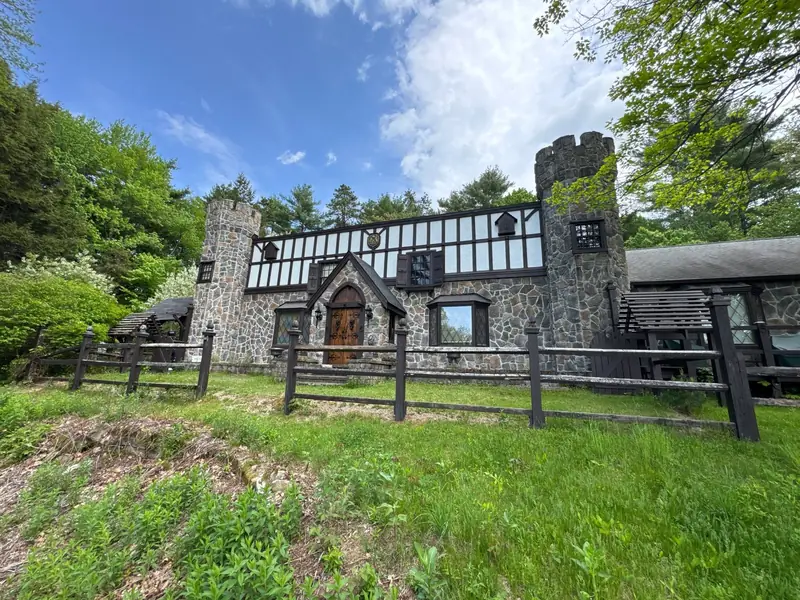
- Curved or odd shapes that shingles can’t wrap, like the stone turrets on a home in Deerfield
- Commercial flat roofs. See commercial low-slope EPDM.
On some low-slope sections, standing seam metal is the other option. Our metal roofing page covers it. For most porches, dormers and flat sections, EPDM is the simpler and less expensive fit.
What’s included in a Compass EPDM roof
A tear-off to the deck, deck repair, a 60-mil EPDM membrane fully adhered to the wood, and sealed seams, edges and transitions. Where water ponds, we add tapered insulation so it drains.
- Tear-off to the deck. The old membrane, roll roofing or shingles come off so we can see the wood.
- Deck repair. Soft or rotted boards get replaced before anything goes down. You see it on the video first.
- 60-mil EPDM membrane. Thicker membrane holds up better to foot traffic, weather and UV than thinner sheets.
- Fully adhered. The membrane is bonded to the deck across its whole surface with roofing adhesive. No screws through the surface and no stone ballast, so there’s no added weight on the framing.
- Drainage planning. Where water ponds, we add tapered insulation to build slope toward the edge or drain.
- Seams and penetrations sealed with EPDM-compatible tape and sealant.
- New drip edge and edge metal for a clean, finished edge.
- Transitions tied in correctly where the rubber meets shingles, walls or siding (more below).
- Cleanup and debris removal are part of the job.
Where do flat and rubber roofs leak?
At the seams, the edges, the penetrations and the transitions. The open field of a rubber sheet rarely fails. The places where it’s cut, joined or tied into something else do.
That’s why we don’t treat a rubber roof leak as a patch job until we know the cause. The usual suspects:
- Seams that were never fully bonded, or where the seam tape has let go
- Edges and drip edge where the membrane was cut short or not terminated
- Penetrations like vent pipes, exhaust fans and skylights
- The shingle-to-rubber transition at a dormer or porch, where water from the steep roof runs onto the flat one
- Ponding. Water that sits for days finds every weak seam and adds weight on the deck
- Shrinkage or blisters on older or poorly adhered roofs, which pull at the edges and open seams
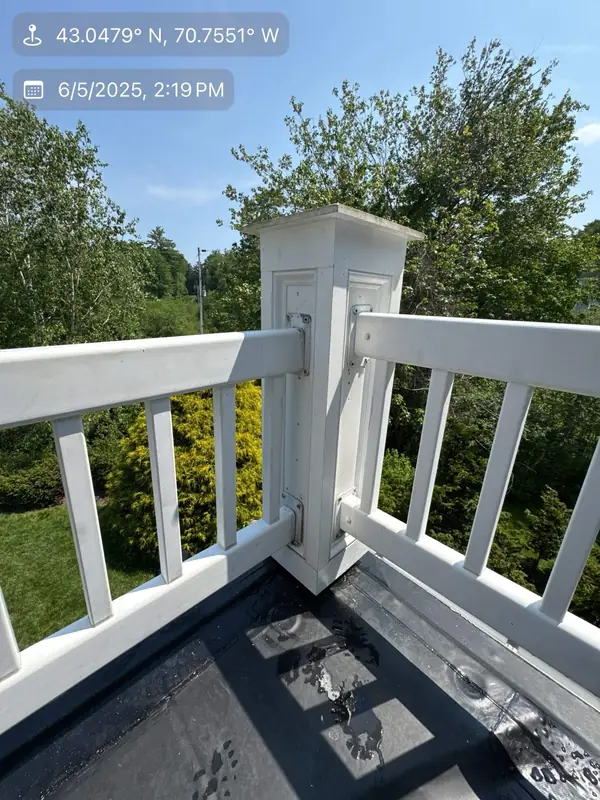
A Portsmouth homeowner had an aging, failing low-slope roof. We removed the old membrane down to the deck, repaired the deck, installed a fully adhered 60-mil EPDM membrane, sealed every seam and penetration and finished the edges with new drip edge. See the Portsmouth project.
Can you repair a rubber roof, or does it need to be replaced?
Many rubber roof leaks can be repaired, because most come from one seam, edge or transition. If the membrane is failing across the roof, or the deck under it has rotted, replacement is the better call.
We get on the roof, find where the water is getting in, and record a narrated video showing it. Then we tell you which one you’re dealing with. A few examples from our own work:
- Manchester: a leaking flat roof over a dormer turned out to have damaged framing underneath. We removed the bad framing, rebuilt the dormer, installed new sheathing and put on a new fully adhered EPDM roof. Patching the membrane wouldn’t have fixed it. See the Manchester project.
- Kensington: years of leaks traced to a dead valley with failed waterproofing and a shingle-to-EPDM dormer transition that was never terminated correctly. We rebuilt the dead valley with EPDM membrane and rebuilt the dormer transition. See the Kensington project.
For leaks on shingle and metal roofs, see roof repair.
How does an EPDM section tie into a shingle roof?
With metal flashing lapped and sealed at every edge where the two systems meet, plus a water barrier at the transition. That way, water coming off the shingles runs onto the rubber instead of under it.
This is the most important detail on a house with two roof systems. Water from the steep roof always runs toward the flat one. If the transition isn’t built right, it undermines the whole rubber section from above. Many of our EPDM jobs are part of a bigger roof replacement:
- Goffstown: Owens Corning Duration shingles in Onyx Black on the main roof and a fully adhered EPDM roof on a low-slope section at the back of the house, with lapped metal flashing and a water barrier at the transition. See the Goffstown project.
- Merrimack: Owens Corning Duration shingles in Aged Copper on the steep slopes, a fully adhered EPDM roof on a low-slope addition, and partial re-decking where moisture had rotted the wood. See the Merrimack project.
- Pembroke: Owens Corning Duration shingles in Peppercorn, EPDM on the low-slope sections, a new gazebo roof and a black metal ice belt along the eaves. See the Pembroke project.
If the main roof is due too, doing both at once means one crew owns the transition. See roof replacement.
How does EPDM handle NH snow, ice and coastal wind?
Well, if it’s fully adhered and drains. EPDM stays flexible in deep cold, a fully adhered membrane resists wind uplift, and good drainage keeps snowmelt from sitting on the roof.
- Snow and meltwater. A flat roof holds snow longer than a pitched one, and meltwater has nowhere fast to go. Ponding is the enemy of a flat roof, which is why we plan drainage and add tapered insulation where water collects.
- Ice dams. Low-slope sections and the spots where they meet the main roof are where ice backs up. On shingle sections next to the rubber, we use ice and water shield at the eaves, in valleys and on low-slope areas. Our post on ice dams in New Hampshire explains why they form. We remove ice dams when they’re causing a leak, but we don’t offer ice dam steaming.
- Wind. Nor’easters on the Seacoast pull hardest at roof edges. Because a fully adhered membrane is bonded across the whole deck, there’s nothing loose for wind to get under, and we finish the edges with new drip edge.
- Freeze-thaw. EPDM doesn’t get brittle and crack in the cold.
How long does an EPDM roof last?
EPDM is a long-lasting membrane when it’s installed and maintained properly, and it has more than 50 years of track record as a roofing material. How long your roof lasts depends mostly on the seams, the edges and whether water drains off it.
The best things you can do for a rubber roof: keep it draining, keep foot traffic off it, and have seams, edges and penetrations looked at after a hard winter. Small seam or edge problems are much cheaper to fix early than after water has reached the deck.
What affects the cost of an EPDM rubber roof?
The size of the flat section, how much of the deck needs repair, whether it needs tapered insulation to drain, and how many seams, penetrations and shingle transitions it has. We give you an itemized, fixed-price quote after an on-roof inspection with a narrated video.
The main cost drivers:
- Size and shape. Square footage, plus curves, corners and odd shapes like dormers and turrets that need hand-fitting.
- Tear-off. How many layers of old membrane, roll roofing or shingles come off.
- Decking. How much soft or rotted wood has to be replaced once the old roof is off.
- Drainage. Whether ponding means adding tapered insulation to build slope.
- Transitions and penetrations. Each tie-in to shingles, walls or siding, and each vent, pipe or skylight, adds flashing and sealing work.
- Edge metal. New drip edge and edge details around the perimeter.
- Access. How easy it is to reach the roof and stage materials, especially on a second-story dormer or a porch over a finished space.
- Bundling. Doing the flat section with a full roof replacement means one tear-off and one crew owning the transition.
Every line is on the quote, so you can see what you’re paying for. Financing is available through third-party lenders, including 0% down and 0% interest options for qualified buyers. For context on full roof costs, see roof replacement cost.
How a Compass EPDM job works
Every job starts with an on-roof inspection and a narrated video, so you see the problem before you decide anything. From there, it’s an honest repair-or-replace call, then a clean install with the transitions done right.
- On-roof inspection. We walk the roof, check the seams, edges, penetrations and transitions, and record a narrated video. The video is yours to keep.
- Honest recommendation. Repair if the problem is in one place. Replacement if the membrane or deck is done.
- Tear-off and deck repair. Down to the wood, with bad boards replaced.
- Drainage and membrane. Tapered insulation where needed, then the 60-mil membrane fully adhered.
- Seams, edges and transitions. Sealed, flashed and tied into the shingles, walls or siding.
- Walkthrough. Photos of the finished roof and a walk through what was done.
Recent EPDM projects
We’ve installed and repaired EPDM on porches, dormers, additions, dead valleys and even curved stone turrets. Here are recent jobs from the Seacoast to the Merrimack Valley.
- Portsmouth: failing low-slope roof torn off, deck repaired, new fully adhered 60-mil EPDM and drip edge. Project
- Deerfield: EPDM hand-fitted around two curved stone turrets that shingles couldn’t cover, with a shingle main roof. Project
- Manchester: dormer framing rebuilt, new sheathing and a new fully adhered EPDM roof. Project
- Goffstown: Onyx Black shingles and a fully adhered EPDM rear section. Project
- Merrimack: Aged Copper shingles and EPDM on a low-slope addition. Project
- Pembroke: Peppercorn shingles, EPDM low-slope sections and a new gazebo roof. Project
- Kensington: dead valley rebuilt with EPDM and a failed dormer transition corrected. Project
Where we install rubber roofs
We install and repair EPDM rubber roofs across southern New Hampshire, northern Massachusetts and southern Maine. We’re based in Stratham.
We install and repair EPDM roofs on the Seacoast, in greater Manchester and the Merrimack Valley, northern Massachusetts and southern Maine. Recent rubber roof work includes Portsmouth, Deerfield, Manchester, Goffstown, Merrimack, Pembroke and Kensington. Not sure if you’re in range? Put your address on the form and we’ll let you know.