
Understanding Roof Replacement Costs in NH: A 2026 Guide
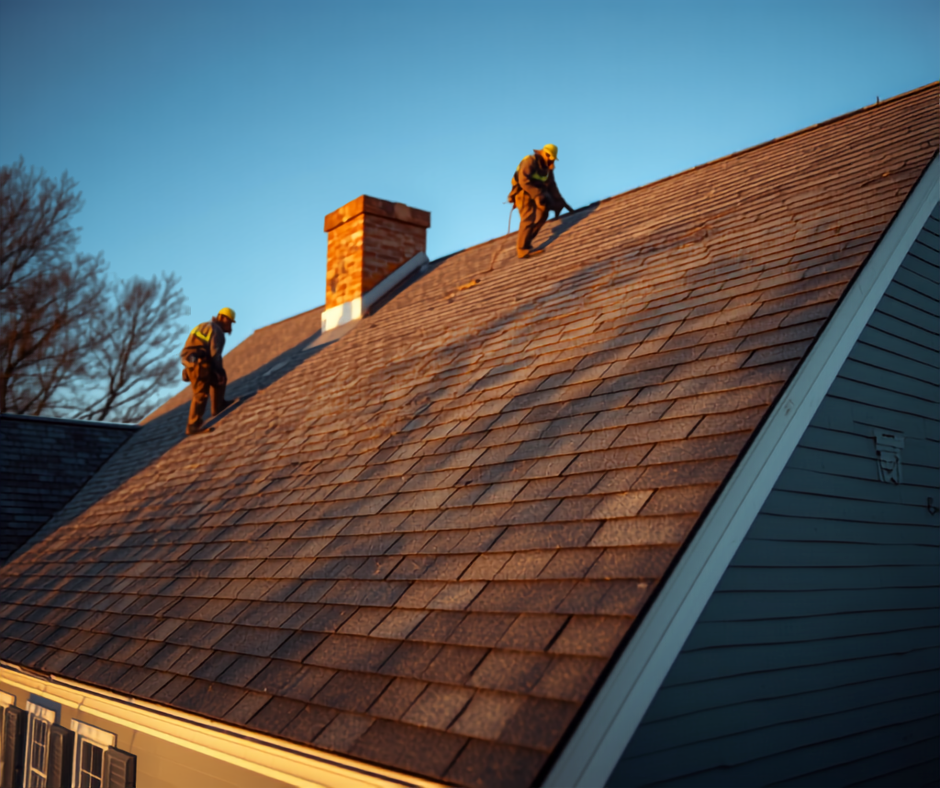
Few home projects feel as intimidating as replacing a roof. It’s one of the most important structural components of your house, and yet most homeowners have no idea how the pricing works until a quote lands in their inbox. That’s not your fault — the industry talks in “squares” and “bundles” and buries real costs in line items nobody explains. If you’re staring at your ceiling wondering what a roof replacement in NH is going to run you, this guide walks through the whole thing.
We write these quotes every week, from Portsmouth to Meredith, so consider this the explanation we’d give you across your kitchen table. We’ll cover how roofers measure, what shingles actually cost, why labor is the biggest line, the fees that catch people off guard, and what the finished number should look like. If you just want the bottom-line pricing by town and roof size, our full 2026 NH roof replacement cost guide covers that in detail — this post is about understanding why the number is what it is.
A full asphalt roof replacement in New Hampshire typically costs $14,000-$25,000 in 2026 — about $5.50-$8.50 per square foot installed for architectural shingles. Materials are the smaller share; labor, tear-off, disposal, and decking repair make up most of the bill, and roof pitch and complexity drive where you land in that range.
First: Does Your Roof Actually Need Replacement?
Before you spend a minute on pricing, make sure a full replacement is warranted. The signs we take seriously: sagging rooflines, water staining or daylight visible in the attic, shingles losing granules by the handful into your gutters, and widespread curling or cracking. One leak around a pipe boot is a repair, not a replacement — we’ve written a whole post on the repair-vs-replace decision. But if your roof is 20+ years old and showing several of these at once, it’s time to talk numbers.
What Is a Roofing Square?
A roofing square is 100 square feet of roof surface. It’s the standard unit for measuring and pricing roofs. A 2,000 sq ft roof is 20 squares, and shingles are packaged three bundles to the square.
Roofers don’t price by the square foot the way flooring installers do — we work in squares. The math is simple: divide roof area by 100. But here’s the part homeowners miss: your roof area is not your home’s footprint. Pitch adds surface. A 1,800 sq ft ranch with a shallow 4/12 pitch might have 20 squares of roof; the same footprint under a steep 10/12 colonial roof can push 26 or more. That’s why online calculators spit out numbers that rarely survive contact with an actual measurement — and why we measure every roof in person before quoting. No drones, no satellite guesses.
What Do Shingles Actually Cost?
In 2026, a bundle of architectural shingles runs $40-$60 at NH suppliers ($35-$45 for basic 3-tab). Three bundles cover one square, so shingle material is roughly $110-$180 per square — only a fraction of the $550-$850 per square a professionally installed roof costs.
Walk into any supplier in Exeter or Rochester and you’ll see shingles sold by the bundle. Three bundles to a square, so material math is easy. What trips people up is the gap between that number and their quote — “shingles are $150 a square, why is my roof $700 a square?” Because the shingle is maybe a fifth of the job. Underlayment, ice & water shield (required by code at NH eaves), drip edge, flashing, ridge vent, nails, tear-off, disposal, and skilled labor make up the rest. Cheap shingles don’t fix that ratio — they just put a worse product on top of all the same fixed costs, which is why we don’t recommend bargain-hunting on the material itself.
Architectural vs. 3-Tab
Nearly every roof we install is architectural (dimensional) shingle — thicker, layered, rated for 110-130 mph winds, and good for 25-30 years in our climate. 3-tab is flatter, thinner, rated around 60-70 mph, and lasts 15-20 years. The installed difference is only $1-$2 per square foot, and on a cost-per-year basis the architectural shingle usually wins outright. We break down the full comparison — including when 3-tab still makes sense for garages and sheds — in our architectural vs. 3-tab guide. And if you’re curious about metal: it runs two to three times the upfront cost of asphalt but can outlast two shingle roofs. Our asphalt vs. metal comparison covers that trade-off.
| Cost Component | Typical 2026 NH Range | Notes |
|---|---|---|
| Architectural shingles (material) | $110–$180 per square | $40–$60 per bundle, 3 bundles/square |
| 3-tab shingles (material) | $105–$135 per square | $35–$45 per bundle |
| Installed — architectural | $5.50–$8.50 per sq ft | $550–$850 per square, all-in |
| Installed — 3-tab | $4.50–$6.50 per sq ft | Rarely worth it on a primary home |
| Decking replacement | $70–$120 per sheet, installed | Only sheets that need it — get the per-sheet price in writing |
| Full replacement, typical NH home | $14,000–$25,000 | Size, pitch, and complexity set where you land |
Why Is Labor Most of the Bill?
Labor is typically around 60% of a roof replacement cost. Tear-off, decking repair, dry-in, flashing work, installation, and cleanup are all skilled trades performed at height — and roof pitch is the single biggest labor multiplier.
A roof crew isn’t just nailing shingles. They’re stripping the old roof to bare wood, inspecting every sheet of decking, replacing what’s rotted, installing the dry-in layers that actually keep water out, rebuilding flashing at every chimney and wall, and hauling away a few tons of debris — usually all in one day. (Our roof replacement process post walks through all five stages.)
Pitch changes everything. A walkable 5/12 ranch roof is a fast, safe workday. A 12/12 Victorian in Portsmouth requires staging, roof jacks, harnesses on every cutter, and roughly twice the install time per square. Same house size, very different quote. Complexity does the same thing — every valley, dormer, and skylight adds cutting, flashing, and time. When two quotes for “the same roof” differ, pitch and complexity handling is usually why.
Ask every contractor for their per-sheet decking replacement price before you sign — it should be in the contract, not negotiated after tear-off when your roof is open and you have zero leverage. A fair 2026 number in NH is $70-$120 per sheet, installed. “We’ll deal with rot if we find it” is not a price.
The Line Items That Catch Homeowners Off Guard
A complete quote should spell out three things people forget to budget for:
- Tear-off and disposal. Old asphalt shingles are heavy — a typical roof produces two to three tons of debris. Dumpster and landfill fees are real costs and should be a visible line, not folded invisibly into “misc.”
- Decking repair. Nobody knows what’s under your shingles until they’re off. We’ve torn off roofs in Stratham where the sheathing was spongy enough to flex underfoot. A few bad sheets is normal on an older roof; the per-sheet price protects you from the surprise.
- Permits. Most NH, MA, and ME towns require a building permit for a re-roof, and fees vary by municipality. Your contractor should pull it — if they ask you to pull the permit, that’s a red flag (it usually means they don’t want their name on the job). More red flags in our contractor selection guide.
Is a New Roof Worth It? ROI, Warranties, and Financing
A new roof typically recovers 60-70% of its cost at resale, removes the single biggest home-inspection deal-killer, and — when installed by a manufacturer-certified contractor — carries warranty coverage that protects the investment for decades.
Nobody replaces a roof for fun, but the return is real: stronger curb appeal, a clean home inspection when you sell, and 60-70% cost recovery at resale. The warranty matters just as much — a properly registered system warranty covers materials for decades, and workmanship coverage protects the installation itself. There are real differences between warranty tiers and real ways to void them, which we covered in our warranty deep-dive. As an Owens Corning Preferred Contractor, we can register system-level coverage that a non-certified installer can’t.
And if the number is the obstacle: ask about financing. Reputable contractors — us included — offer payment plans that let you fix the roof now rather than waiting while a slow leak turns a $18,000 project into a $25,000 one. Just make sure you’re comparing the total financed cost, not only the monthly payment.
What Moves the Number in Our Service Area
Seacoast NH (Exeter, Stratham, Portsmouth, Hampton, Dover)
Coastal wind exposure makes the 110-130 mph rating on architectural shingles worth every dollar — we won’t put 3-tab on an exposed Seacoast roof. Salt air is also hard on cheap flashing metals, so quotes here should specify flashing materials, not just “flashing included.” Historic districts in Portsmouth and Exeter can add permit review time.
Lakes Region NH (Laconia, Meredith, Wolfeboro, Gilford)
Snow load and freeze-thaw cycling are the cost drivers. Code-minimum ice & water shield isn’t enough on many lake-area roofs — we often run extra courses at the eaves and valleys, which adds a little material cost and saves a lot of February grief. Camp roads and island access can also affect logistics on some Winnipesaukee properties.
Northern MA (Newburyport, Amesbury, Haverhill, Merrimac)
Coastal storm exposure similar to the Seacoast, plus town-by-town permit fee differences that show up as small quote variations. The older housing stock in the mill towns means we budget more decking contingency — an 1880s roof frame has usually had several roofs nailed over it, and the sheathing tells the story.
Southern ME (Kittery, York, South Berwick, Eliot, Berwick)
York County combines coastal wind with inland-grade snow loads — the toughest of both. Steeper historic rooflines around York village push labor toward the top of the range, and we spec upgraded ice & water coverage on most roofs here. Maine permit requirements vary by town; we handle the paperwork either way.
Frequently Asked Questions
How much does a roof replacement cost in New Hampshire in 2026?
Most full asphalt roof replacements in NH run $14,000-$25,000 in 2026 — about $5.50-$8.50 per square foot installed for architectural shingles. Size, pitch, complexity, and decking condition determine where you land in that range.
What is a roofing square?
A roofing square is 100 square feet of roof surface — the standard unit for measuring and pricing roofs. A 2,000 sq ft roof is 20 squares, and shingles are packaged three bundles to the square.
How much is a bundle of shingles in 2026?
Architectural shingle bundles run about $40-$60 at NH suppliers; basic 3-tab runs $35-$45. Three bundles cover a square, so material alone is roughly $110-$180 per square — a fraction of the installed price.
Why is labor such a large share of the cost?
Labor is typically around 60% of the bill. Tear-off, decking repair, dry-in, flashing, installation, and cleanup are all skilled work at height, and steep pitches can double install time per square.
What hidden costs should I watch for in a quote?
Tear-off and disposal fees, rotted decking found after tear-off ($70-$120 per sheet installed — get it in writing), and municipal permit fees. A complete quote lists all three up front.
Are architectural shingles worth the extra cost over 3-tab?
On a primary home in NH, yes. They cost $1-$2 more per square foot installed but last 25-30 years versus 15-20 and carry far better wind ratings. Per year of service, they’re usually the cheaper roof.
Does a new roof add resale value?
A new roof typically recovers 60-70% of its cost at resale and removes the biggest deal-killer in a home inspection. Registered, transferable warranties add real value for the next owner.
Want a Real Number Instead of a Range?
We measure every roof in person — pitch, complexity, decking, attic, all of it — and hand you a line-item quote with the decking price in writing. No drones, no drive-by estimates, no mystery math. As an Owens Corning Preferred Contractor, we back it with warranty coverage most installers can’t offer.