
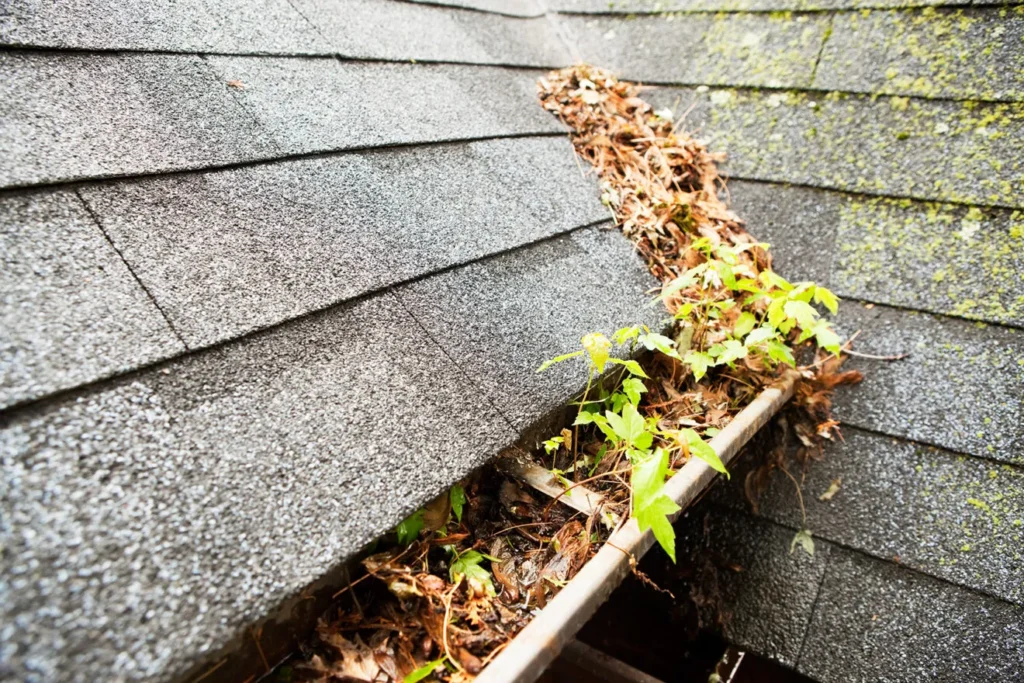
The first warm Saturday in April, half the homeowners in Stratham are on a ladder with their hands in the gutter. We get it. The snow’s finally gone, the trees are about to bud, and nobody wants a water problem heading into summer. But spring gutter cleaning in New Hampshire isn’t just about scooping out last fall’s leaves — the real damage hides where most homeowners never look.
We’ve been pulling gutters off homes across the Seacoast, Lakes Region, and Northern MA for years. Here’s what spring maintenance should actually cover, what warning signs mean your gutters are done, and the mistakes that cost homeowners a fascia replacement they didn’t need.
Why Spring Specifically?
Fall cleaning gets all the attention. Spring matters just as much — sometimes more. Here’s why:
- Ice dam damage from winter. If you had ice buildup at your eaves this past winter (most of inland NH did), your gutters took a beating. Expansion from freeze-thaw bends hangers and pulls spikes loose.
- Accumulated shingle grit. Melted snow drags asphalt granules off aging shingles into the gutter. By April, a neglected gutter looks like someone poured a bag of black sand into it.
- Helicopter seeds and maple buds. Late April through May, maple and oak drop millions of seed pods. A clogged gutter in mid-May creates overflow issues right when you’re heading into summer storms.
- Standing water from spring rain. Our April rainfall averages 3.5-4 inches across Rockingham County. A compromised gutter will show its problems fast.
The 9-Point Spring Gutter Checklist
Here’s what we actually check when we’re on a homeowner’s roof in April. You can do most of this yourself if you’re comfortable on a ladder. If not, any reputable roofer in your area will do a gutter walk as part of a spring inspection.
1. Clean out the debris — but look at what’s there
Obvious first step. But don’t just toss the gunk on the ground and move on. A gutter full of asphalt granules means your shingles are aging fast. If you can run your hand through it and pull up a half-cup of black grit, your roof is in the back half of its life. That’s a signal to schedule a roof inspection, not just ignore.
2. Flush with a hose and watch the downspouts
Run water from the far end of each gutter run. Water should pour out the downspout within 5-10 seconds. If it doesn’t, you’ve got a clog — usually at the top of the downspout where debris catches, or at the elbow where it meets the underground drain line. A garden hose nozzle on “jet” will clear most clogs. A plumber’s snake handles the rest.
3. Check the pitch toward the downspout
Water should flow downhill. If you dump a bucket in at the high end and water sits pooling in the middle of the run, your gutter has sagged. This is really common after a hard winter in NH — ice weight bends the gutter and it never springs back. Standing water accelerates rust on metal gutters and invites mosquitoes.
4. Inspect every hanger and spike
Old-school spike-and-ferrule installations loosen over winter. Grab each hanger and wiggle it. Anything loose needs to be re-secured or replaced with a proper hidden hanger (our standard — they hold better and don’t mar the fascia). If you see more than a few loose spikes, plan on a full re-hang rather than piecemeal fixes.
5. Look for separated or leaking seams
Older sectional gutters have seams every 10 feet that eventually leak. If you see staining down the fascia or drip marks on your siding below a seam, the silicone sealant has failed. You can re-caulk with tripolymer sealant (not regular silicone — it doesn’t stick to aluminum long-term). If you’ve got multiple failed seams, seamless aluminum gutters are a better long-term fix.
6. Check the fascia board behind the gutter
This is where damage hides. Water leaking behind a gutter rots fascia. Look for soft spots, peeling paint, or visible wood rot. We pulled a gutter off a house in Newmarket last spring and found 12 feet of fascia so rotted the hangers had nothing to bite into. The homeowner thought she needed new gutters. She needed new gutters, new fascia, and new drip edge — $2,400 instead of $1,100.
7. Examine the drip edge
Drip edge is the metal flashing that tucks under your first course of shingles and over the top edge of the gutter. If it’s missing, bent back, or was never installed (common on older homes), water runs behind your gutter and down the fascia. This is the #1 cause of rot we find on NH homes built before 1995.
8. Walk the perimeter and look for ground-level damage
Where does your downspout dump? Ideally it extends 4-6 feet from the foundation via an extension or splash block. If it dumps right at the foundation, you’re sending thousands of gallons of roof runoff directly to your basement. Look for erosion channels, wet mulch, or visible basement moisture issues. Easy fix — a downspout extension runs $15-25 at any hardware store.
9. Check inside the attic on a rainy day
Next time it rains hard, go up to the attic with a flashlight. Look at the roof decking near the eaves. If you see water stains or active drips above where your gutters are, you’ve got either an ice dam failure point or a gutter/drip edge problem that’s pushing water back under the shingles. This is the hidden damage nobody catches until the ceiling stains.
Quick tip: If you clean your gutters every spring and fall and still find them full by mid-summer, you’re spending money on a maintenance problem you can solve. Quality gutter guards (we install Leaf Relief and Gutter Helmet systems) pay for themselves in 3-4 years for homes surrounded by mature trees.
When Cleaning Isn’t Enough: Signs You Need New Gutters
Sometimes the honest answer is that your gutters are past their service life. Aluminum gutters last 20-30 years in NH. Galvanized steel goes 20 years. Copper? 50+. If yours are original to a home built in the 1990s or earlier, replacement may be more cost-effective than repair.
Red flags that mean replacement, not repair:
- Multiple visible rust spots, pinholes, or corrosion through the gutter floor
- Sagging that doesn’t correct after re-hanging
- Fascia damage requiring gutter removal anyway
- Seams that have been re-caulked three or more times
- Gutters that were undersized for your roof area to begin with (common on additions)
- Any gutter section that’s been hit by ice, a falling branch, or a ladder and is now dented or bent
Regional Conditions Across Our Service Area
Gutter maintenance priorities shift depending on where your home is:
Seacoast NH (Stratham, Exeter, Hampton, Portsmouth, Dover, Newmarket): Salt air accelerates aluminum corrosion within a mile of the ocean. Check for chalking and pinholes more aggressively on older installations. Seamless aluminum is still the standard — copper is overkill for most Seacoast homes.
Lakes Region NH (Laconia, Meredith, Gilford, Wolfeboro, Belmont): Heavy snow loads and ice dams do the most gutter damage of any region we serve. Plan on checking for ice-bent hangers every spring. Oversized 6-inch gutters and larger 3×4 downspouts handle the runoff from spring melt better than standard 5-inch K-style.
Northern MA (Newburyport, Amesbury, Haverhill, Merrimac): Heavy tree cover in older neighborhoods means leaf accumulation is the primary maintenance driver. Gutter guards earn their keep here faster than in open NH lots.
Southern ME (Kittery, York, South Berwick, Eliot, Berwick): Similar profile to the Seacoast — coastal salt air plus mature tree cover. Expect the same maintenance rhythm.
Frequently Asked Questions
How often should gutters be cleaned in New Hampshire?
Twice a year minimum — once in late spring (after maple seeds drop) and once in late fall (after leaves are down). Homes with heavy tree cover may need a mid-summer check too. If your roof is more than 15 years old and shedding granules, add a March check after the snow melts.
Do I really need gutter guards?
For homes under mature oak, maple, or pine — yes, they’re worth it. For homes on open lots with few trees — probably not. Cheap plastic mesh guards fail within 2-3 years and make cleaning harder. Quality solid-surface or reverse-curve systems (Gutter Helmet, Leaf Relief, LeafGuard) genuinely work but cost $8-12 per linear foot installed.
How much does professional gutter cleaning cost in NH?
Most companies charge $150-350 for a typical single-story home, $250-500 for a two-story. Price varies with roof height, pitch, and total linear feet. Be wary of anyone quoting under $100 — they’re usually just scooping visible debris and not flushing downspouts or inspecting.
Can gutter damage really cause foundation problems?
Yes, absolutely. A clogged gutter dumps roof runoff at the foundation instead of away from it. Over years, this leads to basement leaks, foundation settling, and frost heave issues in winter. We’ve seen $15,000 basement waterproofing bills traced back to gutters that cost $400 to fix.
Is spring or fall cleaning more important?
Fall gets more votes but spring is equally critical in NH. Winter damage is invisible from the ground, and April rains find every weakness. Homes that only clean in fall end up with spring overflow problems by May.
What to Do Next
If your gutters took a beating this winter or you’re not comfortable on a ladder, we’ll handle the spring cleaning and inspection. Every visit includes a full check of fascia, drip edge, and downspout function — not just a debris scoop. Call 603-219-1523 or schedule a free inspection.