
Standing Seam Metal Roofs in NH: 2026 Cost & Buyer’s Guide
Drive around Wolfeboro or Meredith and count the roofs. Ten years ago a metal roof on a lake house was the exception. Now standing seam is everywhere up there — and the calls we get about it from Portsmouth to Newburyport have roughly tripled. Some of that is looks. Most of it is math: homeowners are tired of buying an asphalt roof every 20–25 years and want the one that outlives the mortgage.
This is our straight-answer guide to standing seam metal roofing in NH — what it actually costs installed in 2026, the difference between snap-lock and mechanical seam panels, steel versus aluminum (this matters a lot near the coast), what nobody tells you about sliding snow and oil canning, and the honest cases where standing seam is the wrong call. We install asphalt, metal, and cedar, so we don’t need to sell you one over the other. Here’s how we’d explain it across your kitchen table.
A standing seam metal roof costs $14–$20 per square foot installed in New Hampshire in 2026 — about $30,000–$50,000 for a typical home — and lasts 50–70 years. It’s two to three times the price of architectural asphalt, but you’ll likely never roof the house again. Spec 24-gauge steel (or aluminum near the coast) with a PVDF/Kynar 500 finish.
What Is a Standing Seam Metal Roof, Exactly?
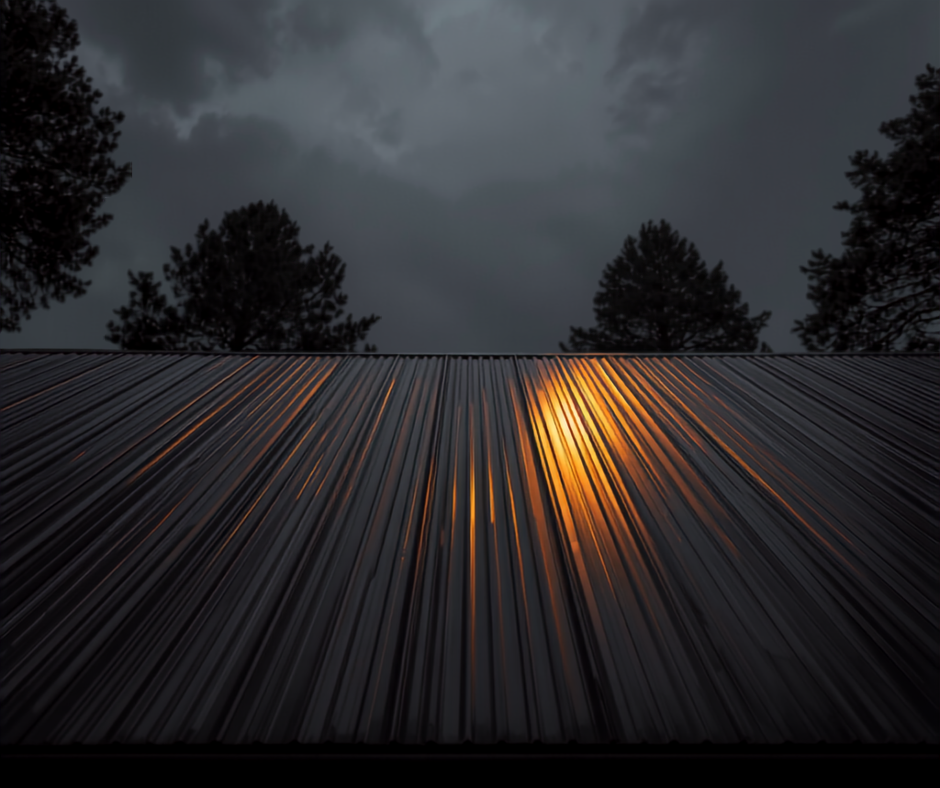
Those crisp vertical lines you see are raised seams, usually 1 to 2 inches tall, where adjacent panels lock together. The panels attach to the roof deck with concealed clips hidden inside the seam. Water never sees a fastener. Compare that to the corrugated metal on a barn or garage, where thousands of gasketed screws are driven straight through the panel face — every one of them a future leak (more on that below).
The other thing that makes standing seam special: the clips let each panel float. Metal expands and contracts a lot between a -10°F January night and a 150°F roof surface in July — on a 30-foot panel run, that movement is real. A properly clipped standing seam roof breathes with the seasons instead of fighting them. That’s a big part of why these roofs last half a century in a climate that destroys lesser systems.
Snap-Lock vs. Mechanical Seam
- Snap-lock — panel edges snap together over the clip, no field seaming. This is the standard for NH homes and what we install on most residential projects. Needs a roof pitch of 3:12 or steeper.
- Mechanical seam — panel edges are crimped together with a seaming machine, single or double lock. More labor, more cost, but it’s the right spec for low-slope sections down to about 1:12 — think shed dormers and porch roofs.
- Nail-strip (fastener flange) — a budget hybrid where the panel is nailed through a flange instead of clipped. It’s fine on short panel runs, but it restricts thermal movement, and on long runs we’ve seen it cause wavy panels and stressed fasteners. If a quote is suspiciously cheap, ask whether it’s true clip-fastened panel or nail-strip. There’s a difference, and it’s in the price.
How Much Does a Standing Seam Metal Roof Cost in NH?
Here’s how standing seam stacks up against the other roofs we install:
| Roof System | Installed Cost / Sq Ft (NH 2026) | Realistic Lifespan | Fasteners |
|---|---|---|---|
| Architectural asphalt | $5.50 – $8.50 | 25–30 years | Nailed (under overlap) |
| Exposed-fastener metal (screw-down) | $8 – $11 | 25–35 years, with gasket maintenance | Thousands of exposed gasketed screws |
| Stamped steel shingles (e.g. EDCO) | $12 – $18 | 50+ years | Concealed |
| Standing seam | $14 – $20 | 50–70 years | Concealed clips — zero surface penetrations |
What pushes a quote toward the top of the range? Complexity, mostly. Standing seam loves big, simple planes — a colonial or a cape with clean gables prices beautifully. A cut-up roof with valleys, dormers, and hips everywhere means more panel fabrication, more trim work, and more hours. Aluminum runs a couple dollars more per foot than steel. And a tear-off of existing layers adds $1–$2 per square foot before the first panel goes down. (For what happens during tear-off and dry-in, our roof replacement process guide walks through it — the underlayment stage matters even more under metal, and it must be high-temp ice & water shield, because a metal roof surface gets hot enough to melt the standard stuff.)
Is it worth double the cost of asphalt? Run the cost-per-year math. A $16/sq ft standing seam roof over 60 years works out to about 27 cents per square foot per year. Asphalt at $7/sq ft replaced twice in that same 60 years costs about 30 cents — more, once you account for price inflation on that second replacement in 2050. Metal wins the long game. The catch is you have to be there for the long game, which is why we tell folks planning to sell within five years to put on a quality architectural shingle and keep the difference.
Standing Seam vs. Screw-Down Metal: Don’t Confuse the Two
We’ll be blunt about this one because it’s where homeowners get burned. “Metal roof” quotes are not all the same product. A screw-down (exposed fastener) roof puts a rubber-gasketed screw through the panel face every couple of square feet — call it 5,000 penetrations on an average house. New Hampshire’s freeze-thaw cycling works those screws loose and cooks the gaskets. By year 15–20 you’re up on the roof replacing screws, or you’re finding ceiling stains. The panel might last 40 years; the fastener system won’t.
Screw-down has its place — barns, sheds, camps, workshops. The price is right and nobody loses sleep over a drip in the woodshed. But when a “metal roof” quote for your house comes in thousands under everyone else’s, it’s almost always screw-down being sold against standing seam. Ask.
Steel or Aluminum? Gauge and Finish Matter More Than Brand
Three spec lines determine whether you bought a 60-year roof or a 30-year one, and they should all be in writing on your quote:
- Gauge: 24-gauge steel is the residential standard — stiff, dent-resistant, holds its lines. 26-gauge is thinner and cheaper and shows it, especially in oil canning. If a low quote doesn’t state the gauge, that’s usually why it’s low.
- Finish: PVDF (Kynar 500 / Hylar 5000) is the premium paint system — 35–40 year finish warranties, excellent fade and chalk resistance. SMP (silicone-modified polyester) is the step-down finish; fine on outbuildings, but on a house you’ll watch dark colors fade unevenly by year 15.
- Metal: Galvalume-coated steel inland; aluminum on the Seacoast. Salt air corrodes cut panel edges on steel, and most steel manufacturers write coastal exclusions into their warranties. Aluminum costs more and dents a little easier, but it simply cannot rust. In Hampton, Rye, or York, that’s the spec.
Get three things in writing on any standing seam quote: panel gauge (24 ga steel or .032 aluminum), finish system (PVDF/Kynar 500, not SMP), and attachment method (clip-fastened, not nail-strip). Those three lines are the difference between quotes that look identical and roofs that age completely differently.
What About Snow? The Part Nobody Warns You About
A standing seam roof sheds snow like nothing else, which is genuinely useful in the Lakes Region where roof snow load is a real structural concern. But a slab of wet March snow releasing off a 8:12 pitch is a few hundred pounds moving fast. We’ve seen it flatten shrubs, take out deck railings, and rip seamless gutters clean off the fascia. Every standing seam roof we install gets snow retention — clamp-on guards or rail systems — above entries, walkways, oil fills, AC condensers, and gutter runs. Clamp-on hardware attaches to the seams without a single hole, so there’s no penalty for doing it right.
Two quick myth checks while we’re here. Rain noise: a residential standing seam roof goes over solid decking and underlayment with insulation below — inside the house it’s as quiet as asphalt. The “loud metal roof” lives on open-framed barns. Oil canning: that slight waviness you can sometimes see across flat panel faces in raking light is a cosmetic characteristic of all flat metal, not a defect. Good installers minimize it with 24-gauge panels and striations or pencil ribs — if dead-flat panels matter to you aesthetically, talk about it before fabrication, not after.
One more point in the plus column: standing seam is the best solar-ready roof you can buy. Panels clamp to the seams with hardware like S-5! — zero drilled holes — and the roof will outlast two generations of the equipment sitting on it. If solar is anywhere in your ten-year plan, that pairing is hard to beat.
Standing Seam Across Our Service Area
Same panel, different priorities depending on where the house sits.
Seacoast NH — Portsmouth, Rye, Hampton, Exeter, Dover
Salt air is the spec-writer here. Within about a mile of the water we quote aluminum with a PVDF finish — steel warranties routinely exclude salt-spray exposure, and corroded cut edges are where coastal steel roofs fail first. Wind performance is a bonus: interlocked seams shrug off the nor’easter gusts that peel shingle tabs.
Lakes Region NH — Wolfeboro, Meredith, Laconia, Gilford
Standing seam country. Heavy snowpack slides off instead of loading the framing, ice dams have far less to grab onto, and the look fits the lake aesthetic — charcoal and matte black panels are everywhere around Winnipesaukee now. Snow retention above entries and over docksides paths is mandatory, not decorative.
Northern MA — Newburyport, Amesbury, Haverhill
Coastal storm wind is the argument here — mechanical-lock seams and clip attachment give standing seam some of the highest wind ratings of any residential roof. On Newburyport’s historic housing stock, a standing seam accent over a porch or ell paired with asphalt on the main roof is a popular, budget-friendlier way to get the look.
Southern ME — Kittery, York, South Berwick, Eliot
York County splits the difference: aluminum near the water in York and Kittery, 24-gauge steel inland. Maine’s snow load favors metal the same way the Lakes Region does, and the classic farmhouse-with-a-metal-roof look is having a moment — half our ME standing seam calls start with a Pinterest photo.
Frequently Asked Questions
How much does a standing seam metal roof cost in NH?
$14–$20 per square foot installed in 2026 — roughly $30,000–$50,000 for a typical 2,200 sq ft roof. Steel with a PVDF finish sits at the lower end; aluminum and complex rooflines push toward the top.
How long does a standing seam metal roof last?
50 to 70 years is realistic in New England for a properly installed 24-gauge roof with a PVDF (Kynar 500) finish, and the paint finish itself typically carries a 35–40 year warranty. It’s the last roof most homeowners will ever buy.
What’s the difference between standing seam and a screw-down metal roof?
Standing seam uses concealed clips — no fasteners penetrate the weather surface. Screw-down panels are attached with thousands of exposed gasketed screws that dry out and back out over time. For a house you plan to keep, standing seam is worth the difference.
Is a standing seam metal roof worth the cost?
If you’re staying 10+ years, usually yes — the cost-per-year over its 50–70 year life beats asphalt replaced twice in the same span, before counting energy savings and snow performance. Selling within 5 years? Put on quality architectural asphalt instead.
Does snow slide off a standing seam metal roof?
Yes — fast and in sheets. That protects your framing from snow load but endangers whatever’s below, so every NH install needs snow guards or rails above doorways, walkways, decks, and gutters.
Are metal roofs loud when it rains?
No. That reputation comes from open-framed barns. A residential standing seam roof installs over solid decking and underlayment with insulation below — inside, it’s no louder than asphalt.
Can you put solar panels on a standing seam metal roof?
It’s the best solar roof there is. Panels clamp directly to the seams with zero drilled holes, and the roof outlasts two generations of solar equipment.
Should I use steel or aluminum near the NH coast?
Within about a mile of salt water — Hampton, Rye, Portsmouth, York — go aluminum. It can’t rust, and most steel warranties exclude salt-spray environments. Inland, 24-gauge galvalume steel is the better value.
Thinking About Metal? Get Real Numbers, Not Guesses.
Compass Exteriors installs standing seam, stamped steel, asphalt, and cedar across 85+ communities in NH, MA, and ME — so you’ll get an honest comparison, not a one-product pitch. As an Owens Corning Preferred Contractor, every estimate starts with a hands-on, in-person roof inspection. No drones, no drive-bys.