

Split-Level Roof Replacement With New Plywood Decking in Kensington, NH
Project Facts
- Location
- Kensington, NH
- Service
- Roofing
- Materials & Products
- Residential Roofing Installation
- Location
- Kensington, NH
- Home Style
- Split-level
- Scope
- Full tear-off, new plywood decking sections, attic ventilation work, ridge vent, brick chimney flashing
- Roofing System
- Synthetic underlayment with architectural asphalt shingles
What Did This Split-Level Kensington Roof Need?
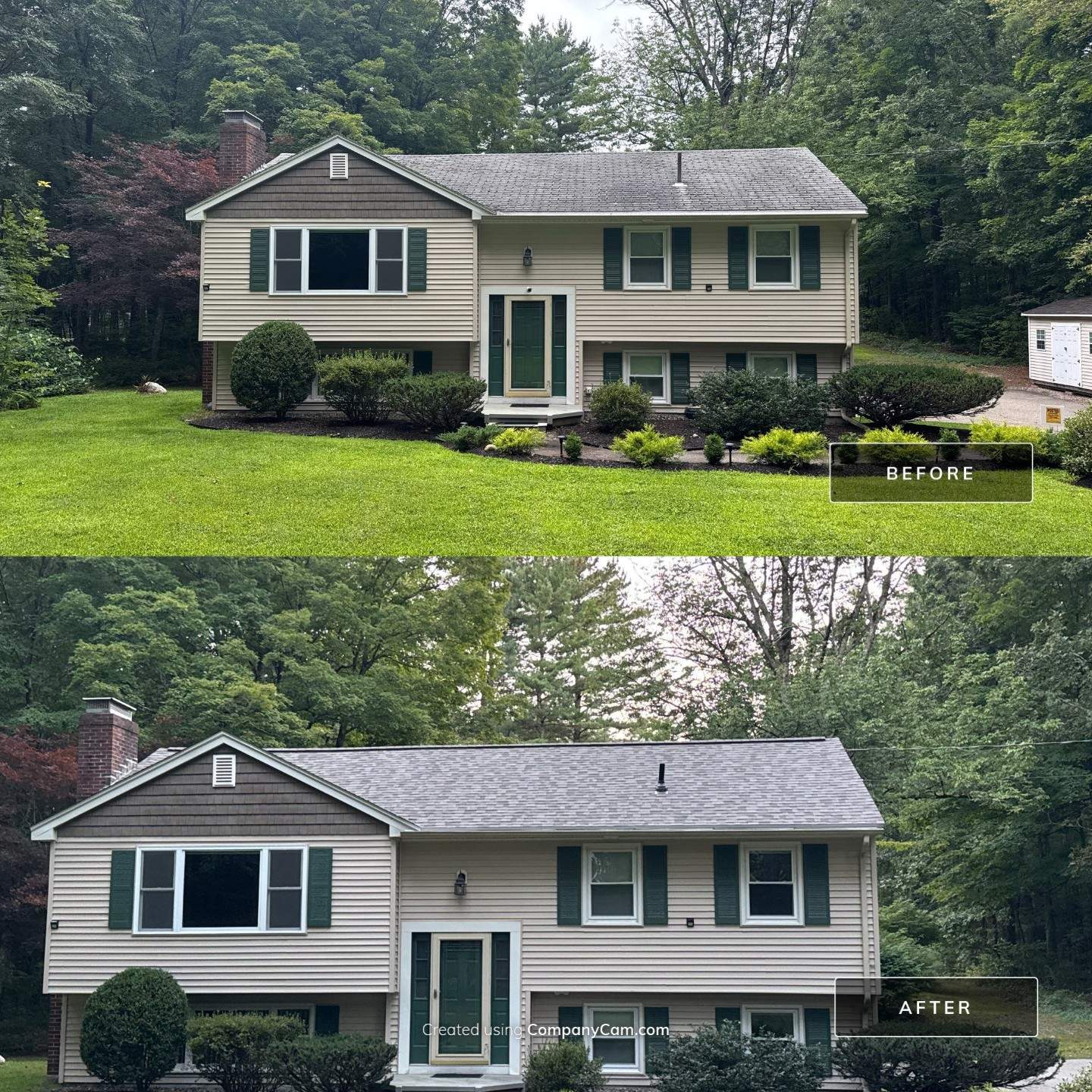
This split-level home in Kensington came to us with a roof that was clearly at the end of its service life. The asphalt shingles showed significant granule loss, and there was extensive biological moss growth across the surface. Neither problem is cosmetic. Granules protect the asphalt layer underneath from sun and weather, and moss holds moisture against the roof instead of letting it shed.
A roof in that condition does not respond well to patching or a layover, so the plan was a full replacement. For the broader process behind jobs like this, see our roof replacement services.
Why Does Moss and Granule Loss Mean a Full Tear-Off?
When shingles lose granules in quantity, the exposed asphalt ages faster and the roof loses much of its ability to shed water. When moss is established on top of that, moisture stays trapped against the shingle surface for long stretches. Our crew performed a complete tear-off rather than covering the old surface, because the only way to know what moss and moisture have done to a roof is to strip it down and look at the deck.
- Granule loss — a sign the shingles are no longer protecting the asphalt layer beneath them
- Moss growth — trapped moisture that can work against shingles and the deck below
- Full tear-off — the roof is taken to bare sheathing so every square foot of the deck can be inspected
What Did We Find Under the Old Shingles?
Once the roof was stripped down to the deck, we identified several sections of deteriorated plywood sheathing. This is exactly why we inspect the deck on every tear-off instead of assuming it is sound. Decking that has been softened by long-term moisture will not hold fasteners the way solid plywood does, and installing new shingles over it only hides the problem.
We replaced the deteriorated sections of plywood to restore structural integrity before any new roofing went on. We also addressed attic ventilation and repaired interior framing details while the roof was open. If you want to see how we handle a different kind of hidden deck problem, our Kensington dead valley repair and replacement is a good comparison.
How Was the New Roof System Built?
After the structural repairs, we installed a complete roofing system rather than just a new layer of shingles. That meant synthetic underlayment over the repaired deck, followed by architectural asphalt shingles selected to handle New Hampshire weather. Synthetic underlayment adds a secondary layer of water protection beneath the shingles, and architectural shingles bring more thickness and dimension than a basic three-tab product.
We also installed minor deck repairs to improve exterior safety and property value, so the finished home was not only watertight but in better overall condition than when we arrived.
Why Do Ridge Vents and Chimney Flashing Matter?
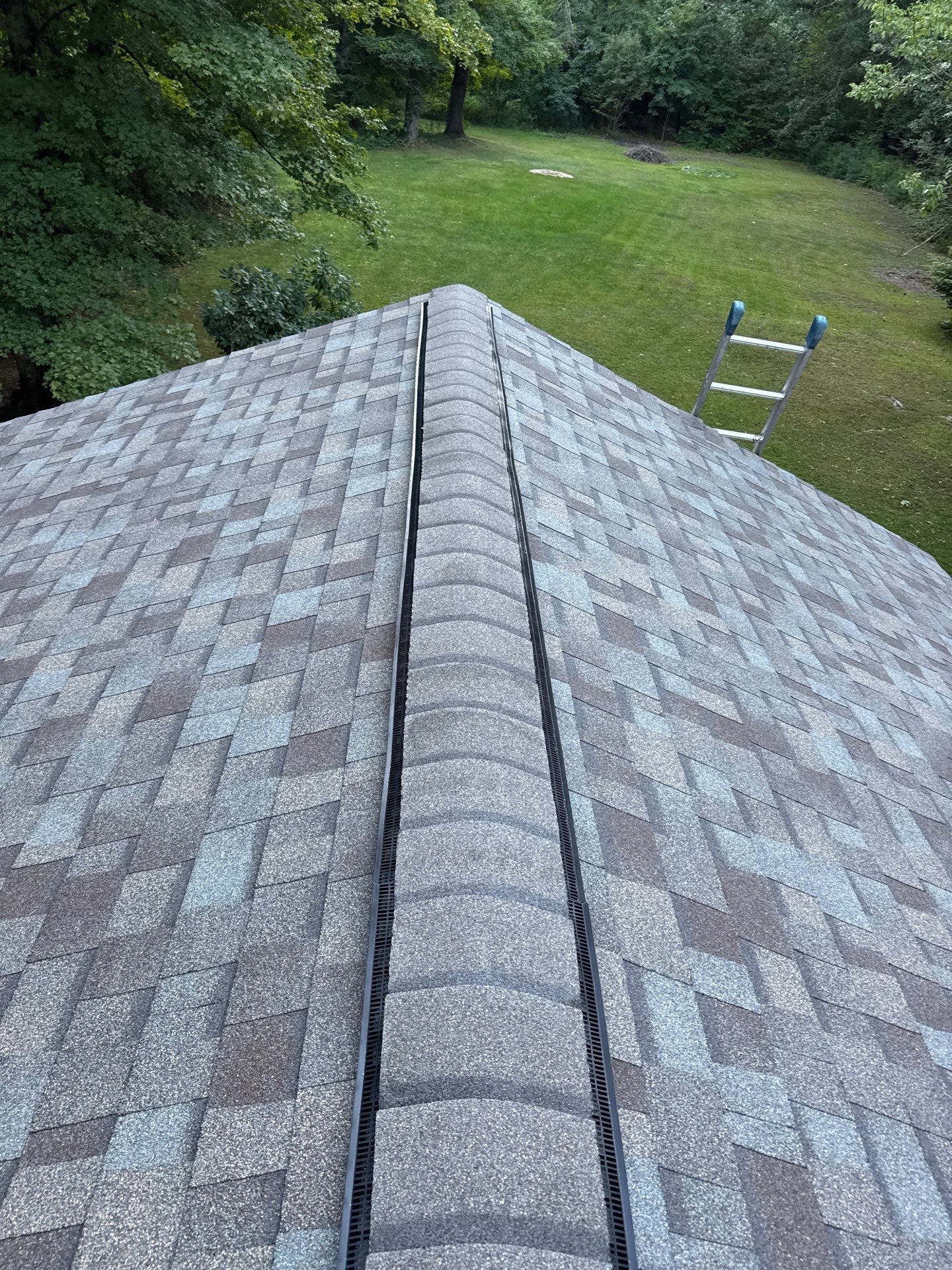
Two details finished this project. First, we installed a new ridge vent system. A ridge vent works with attic ventilation to let air move through the space under the roof, which supports long-term performance of the deck and shingles.
Second, we flashed carefully around the brick chimney. A masonry chimney is one of the most common places for a roof to leak, because water can run along the brick and find the gap where the roof meets the chimney. Precise flashing there prevents moisture penetration and protects the new roof where it is most vulnerable.
What Does This Mean for Kensington Homeowners?
If your roof is covered in moss, losing granules, or showing soft spots when someone walks it, the deck may need attention along with the shingles. A free inspection lets us document the roof with photos before you decide anything. Call Compass Exteriors at 603-219-1523 to schedule yours and get an honest recommendation.
Replacing damaged decking before the new shingles go on is a standard part of our Kensington roofing projects, since a roof is only as sound as the plywood underneath it.
Kensington Roofing — FAQs
Can moss on my roof damage the shingles?
Moss holds moisture against the shingle surface, and on a roof that is already losing granules it can speed up wear. On this split-level Kensington home the shingles showed both significant granule loss and extensive moss growth, and the roof was replaced with a full tear-off.
Why was new plywood decking installed during this roof replacement?
Once the old shingles were removed, we found several sections of deteriorated plywood sheathing. Weak decking will not hold fasteners well, so those sections were replaced before the new synthetic underlayment and architectural shingles went on.
What does a ridge vent do on a roof replacement?
A ridge vent is part of the attic ventilation system and lets air move through the space beneath the roof. On this Kensington project we addressed attic ventilation and installed a new ridge vent as part of the complete roofing system.
Does Compass Exteriors replace roofs in Kensington, NH?
Yes. Kensington is part of our Seacoast service area, and we handle everything from shingle replacement to decking repair and chimney flashing. Call 603-219-1523 for a free roof inspection and estimate.
More Projects Nearby
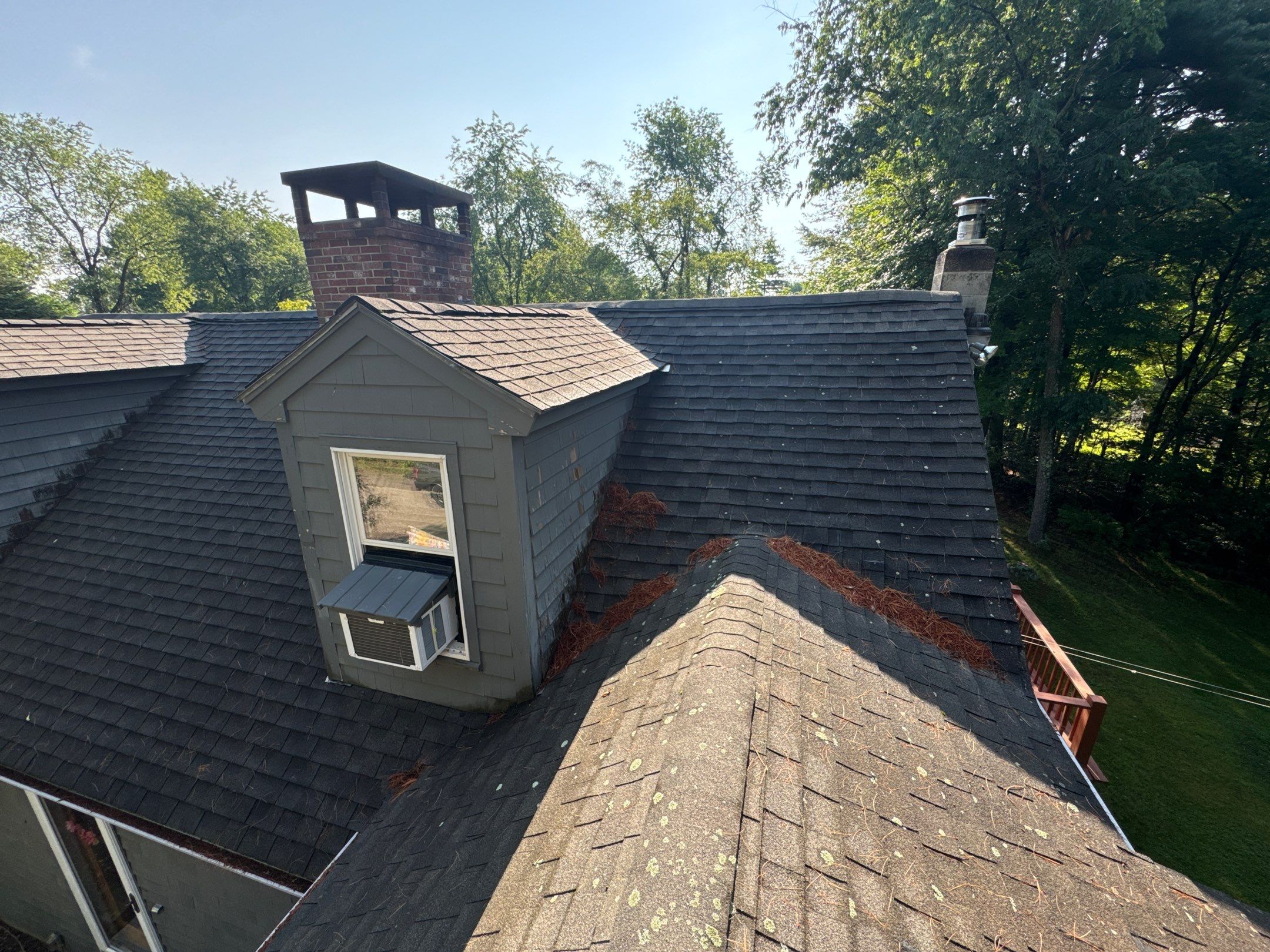
Dead Valley Roof Repair and Replacement in Kensington, NH — GAF Timberline Weathered Wood
View Project Details →

Ready for Your Own Transformation?
Schedule your free inspection today — serving Kensington and 85+ communities across Southern NH.