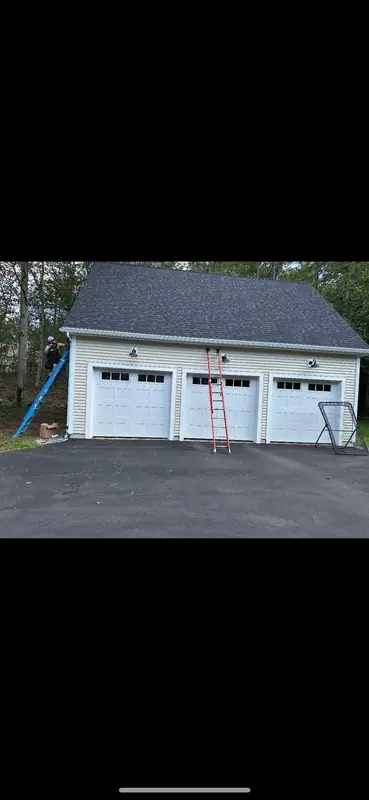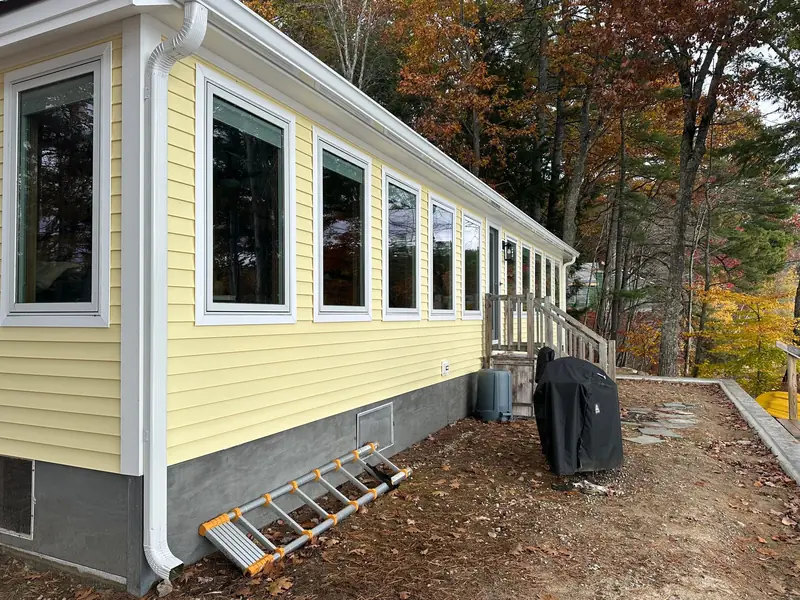
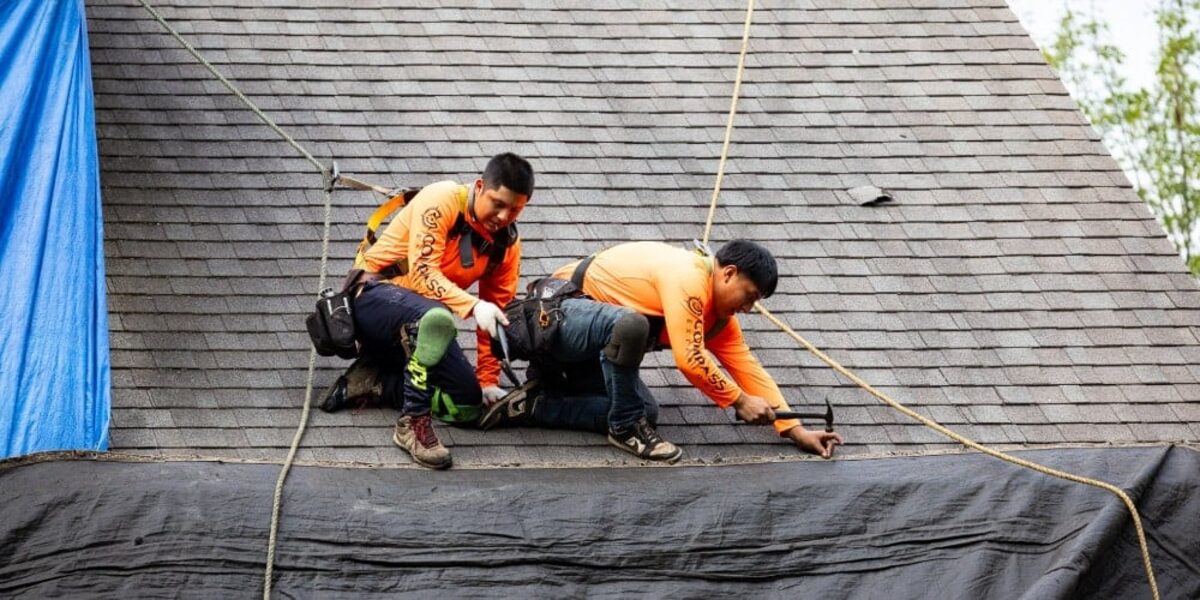
Compass Exteriors installs seamless aluminum gutters across southern New Hampshire, northern Massachusetts and southern Maine. We form each run at your house from one continuous piece of aluminum, in 5-inch or 6-inch K-style, and hang it with hidden hangers fastened with screws every 24 inches. Downspouts are 2×3 or 3×4, there are dozens of factory-baked colors to match your trim, and gutter guards are optional. You can have gutters installed on their own or together with a new roof.
Gutters seem simple until they fail. When they overflow, leak at the seams or pull away from the house, roof water lands right along the foundation, runs behind the fascia and stains the siding. This page covers what goes into one of our gutter installations, which size your house needs, whether gutter guards are worth it, how to tell when your gutters are done, and what gutters can and can’t do about ice dams.
What’s included in a Compass gutter installation
These items come with every seamless gutter job we do:
- Measured and formed on site. We bring a portable roll-forming machine to your house and run each gutter to the exact length of the fascia it follows.
- Seamless aluminum, K-style. The only joints are at the corners and the downspout outlets, not every 10 feet along the run.
- 5-inch or 6-inch, sized to your roof (see below).
- Hidden hangers with screws every 24 inches. We use screws, not spikes, so the gutter holds tight to the fascia through snow and ice.
- Proper pitch toward the downspouts, so water drains out instead of sitting in the trough.
- 2×3 or 3×4 downspouts, placed to carry water away from the foundation.
- Color matched to your trim, from dozens of factory-baked colors.
- A look at the fascia and drip edge behind the old gutters before the new ones go up. Water running behind a gutter is the most common cause of rotted fascia we find.
- Cleanup when we’re done.
Why seamless gutters instead of sectional gutters?
Seamless gutters leak less because they have no joints along the run. Sectional gutters are pieced together from short lengths, and every joint is sealed with caulk that eventually dries out and lets go.
On older sectional systems, you can usually spot the joints by the drip stains on the fascia and siding below them. Re-caulking buys some time, but once you’re re-sealing the same seams every year, a seamless replacement is the better fix. Because our gutters are cut to the length of each wall, there’s no overlapping or gapping at the ends either.
Should I get 5-inch or 6-inch gutters?
Five-inch K-style gutters handle most homes. Six-inch gutters are the better choice for large or steep roofs, long runs, metal roofs and spots where water already pours over the front of the gutter in heavy rain.
A 6-inch gutter is wider and deeper, so it holds a lot more water than a 5-inch, and it’s usually paired with the larger 3×4 downspout. Steep roofs and metal roofs send water down fast, and in a hard rain or a quick snowmelt a 5-inch gutter can overshoot or overflow. On a lake house in Ossipee with a metal roof and extended overhangs, we installed 6-inch K-style seamless gutters because the runoff was too heavy for a standard size. We’ll measure the roof area, check the pitch and look at where water lands now, then recommend a size.
Are gutter guards worth it in New Hampshire?
Gutter guards are worth it when trees hang over your roof, especially pines, or when your gutters are two stories up and hard to clean. If your yard is open and your gutters rarely fill, regular cleaning may be all you need.
We offer two kinds:
- Perforated aluminum guards. Durable and affordable. They let water through while keeping out leaves and larger debris. A good value for most homes.
- Micro-mesh guards. A fine stainless steel mesh that stops smaller debris, including pine needles, maple seeds and shingle granules. This is the option we’d point you to if you have pines near the house.
Guards cut down on cleaning a lot, but no guard makes a gutter maintenance-free. Plan on a quick look once a year, and more often if you have a lot of trees.
Signs your gutters need replacing
Aluminum gutters usually last 20 to 30 years in New Hampshire. When we look at an older system, these are the signs that replacement makes more sense than repair:
- Rust spots, pinholes or corrosion through the bottom of the gutter.
- Sagging that comes back after the gutter is re-hung, or water that pools in the middle of a run.
- Seams that have been re-caulked three or more times.
- Gutters pulling away from the fascia, or loose spikes along the run.
- Rotted or soft fascia behind the gutter. The gutter has to come off to fix it anyway.
- Water spilling over the front in heavy rain, which often means the gutters were undersized from the start. This is common on additions.
- Dents and bends from ice, a falling branch or a ladder.
- Water staining on the siding, wet mulch or erosion at the foundation below the downspouts.
If your gutters are sound but loose, re-hanging them can be enough. On a roof replacement in Goffstown, the fascia boards were repaired and reinforced and the existing gutters were re-hung.
What damages gutters in New Hampshire?
Snow and ice weight, water running behind the gutter, and debris are the three main causes. Each one shows up most after a hard winter.
Ice that builds up in the gutter over a winter bends hangers and pulls old spikes out of the fascia. Then, in spring, the gutter sits a little lower at one end and water pools instead of draining. Melting snow also washes shingle granules into the gutter, and by late April the maples and oaks drop their seeds. A gutter that’s already half full of grit clogs fast.
The damage you can’t see is usually at the fascia. If the drip edge is missing, bent or was never installed, water runs behind the gutter and soaks the fascia board. That’s the number one cause of the rot we find on New Hampshire homes built before 1995. On one Newmarket house, the homeowner thought she needed new gutters. Once the old ones came off, 12 feet of fascia was too rotted to hold a hanger. She needed new gutters, new fascia and new drip edge.
Do gutters cause ice dams? Should I take my gutters off?
No. Ice dams start on the roof, not in the gutter. Heat from the house warms the roof deck, snow melts, and the water refreezes at the cold eave. Gutters and gutter guards don’t cause ice dams and don’t stop them.
A gutter packed with ice can make a dam bigger and heavier, which is one more reason to keep gutters clean going into winter and to hang them with hangers and screws that hold. But taking gutters off just sends all that roof water to your foundation the rest of the year. The real fix is on the roof side: ice and water shield at the eaves and a balanced ventilation system that keeps the roof deck cold. Our post on ice dams in New Hampshire explains how we handle that on a roof replacement.
Should I replace my gutters when I replace my roof?
If your gutters are near the end of their life, yes. Doing both at once means the fascia only gets disturbed once, and the new gutters can be lined up with the new drip edge.
The drip edge carries water off the shingle edge and into the gutter. When both go on in the same project, the water leaves the roof, follows the drip edge and drops straight into the gutter instead of running behind it. Some of our recent jobs show how this works:
- Brentwood: a full roof replacement in Owens Corning Onyx Black shingles, with new seamless aluminum gutters custom-fit on site. See the project.
- Brentwood: Owens Corning TruDefinition Duration shingles in Slatestone Gray, a continuous ridge vent and new seamless gutters tied into the new drip edge. See the project.
- Moultonborough: a full roofing system with ice and water shielding and seamless aluminum gutters, built for Lakes Region snow and ice. See the project.
- Stratham: a full exterior project with a new roof, CertainTeed vinyl siding, windows, gutters and PVC trim. See the project.
If you’re planning a new roof, see our roof replacement page for what’s included.
Recent gutter projects
- Ossipee, on Duncan Lake: 6-inch K-style seamless aluminum gutters, custom-formed on site, sized for heavy runoff from a metal roof with extended overhangs. See the project.
- Brentwood: seamless gutters with two separate roof replacements (both linked above).
- Moultonborough: a new roof with seamless aluminum gutters.
- Stratham: gutters as part of a full exterior renovation.
- Goffstown: existing gutters re-hung during a roof replacement with fascia repairs. See the project.
How a gutter installation works
- Estimate visit. We walk the house, measure every run, look at the fascia and drip edge and note where water lands now. The estimate is free.
- Your choices. Size, downspout size and placement, color and whether you want guards.
- Removal and prep. The old gutters come down. Any soft fascia or missing drip edge we flagged gets dealt with before the new gutters go up.
- Forming and hanging. We roll-form each run on site, set the pitch, and fasten hidden hangers with screws every 24 inches.
- Downspouts and guards. Downspouts go in to carry water away from the foundation, then guards if you chose them.
- Cleanup. We clean up the site when the job is done.
What do seamless gutters cost?
The price depends on total footage, how many stories, 5-inch vs. 6-inch, the number of downspouts and corners, and whether you add guards or fascia repairs. We measure every house before pricing it.
Where we install gutters
We’re based in Stratham and install gutters across the Seacoast, the Merrimack Valley and greater Manchester, the Lakes Region, northern Massachusetts and southern Maine. Recent gutter work includes Brentwood, Stratham, Goffstown, Moultonborough and Ossipee. Not sure if you’re in range? Put your address on the estimate form and we’ll let you know.