
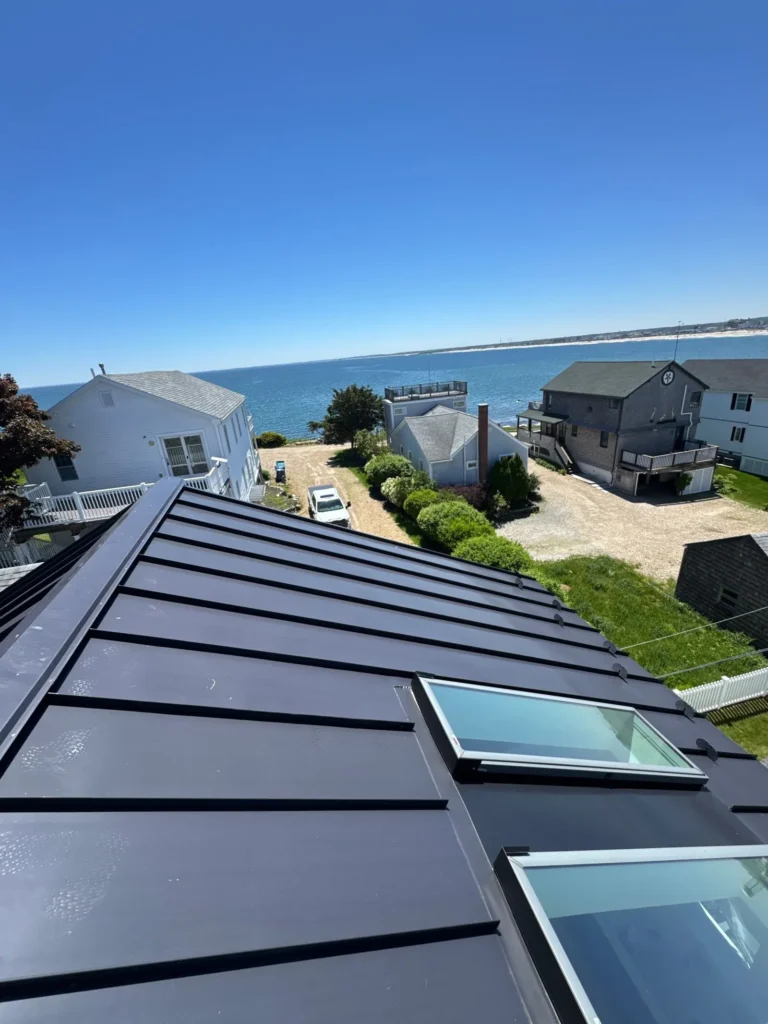
If you can smell low tide from your driveway, your roof has a harder job than the same roof in Concord. You don’t need a special kind of roof; asphalt and metal both work on the coast. What changes is the stuff most estimates skip over: the nails and flashing metal, how the shingles are fastened, how far the ice and water membrane runs, and how the edges are locked down against wind off the water.
We’re Compass Exteriors, a family-owned roofing company in Stratham. We do roof replacement all over the Seacoast, from Portsmouth and New Castle down through Rye, Hampton and Seabrook. Here’s what we pay attention to when a house sits near salt water.
Why do roofs wear out faster on the Seacoast?
Salt air. It settles on everything and stays there. Cheap nails rust. Bare steel flashing bleeds orange streaks down the shingles. On coastal roofs we often find the shingles in fair shape while the metal around the chimney and plumbing vents has corroded through.
Wind. Nor’easters drive rain sideways and pry at the rakes and eaves. When shingles come off after a storm, it’s almost always the edge courses or shingles that never sealed down.
Ice. Coastal winters hover around freezing. Snow melts on a sunny afternoon, refreezes at the cold eave overnight and builds an ice dam. Water backs up behind it and works under the shingles. Older capes and colonials in Exeter, Portsmouth and New Castle tend to have it worst, because many have little insulation and almost no attic ventilation. We wrote about that in what we find roofing 100-year-old Seacoast homes.
What should a coastal roof replacement include?
When we price a house near the water, these are the line items we look for. Check your estimates for them.
Corrosion-resistant fasteners and compatible metals. Nails and flashing should hold up to salt, and metals that touch each other should get along. Copper against galvanized steel, for example, speeds up corrosion.
High-wind nailing and a real starter course. Shingle makers publish a high-wind fastening pattern with more nails per shingle, placed in a specific zone. Near the coast we follow it, and we run starter strip along both the eaves and the rakes, because the edge is where wind gets its grip.
Sound decking. Tear-off is when you find out what’s under the old roof. Soft or rotted boards get replaced before anything goes back on, since new shingles can’t hold fasteners in punky wood.
Ice and water membrane where water actually gets in. In most of New Hampshire, code requires it at the eaves. On the coast we also want it in valleys, around chimneys and skylights, on low-slope sections and anywhere wind-driven rain has caused trouble before.
New flashing, not reused flashing. If the old step and chimney flashing is worn out, nailing new shingles against it only postpones the leak. Our roof flashing guide explains why so many leaks start there.
Balanced ventilation. Air should come in low at the soffits and leave high at the ridge. A cold, well-vented attic is one of the best defenses against ice dams. See why attic ventilation matters on NH roofs.
Is metal or asphalt better near the ocean?
Both can be the right call. It depends on the house, the budget and how exposed the roof is.
Architectural asphalt is what most Seacoast homes have, and installed correctly it handles coastal weather well. A typical architectural asphalt replacement runs about $14,000 to $25,000, or roughly $5.50 to $8.50 per square foot. Our 2026 NH roof replacement cost guide breaks that down.
Metal costs more up front, but it sheds snow, stands up to wind and lasts 50 to 70 years. Near salt spray, check the panel coating and read the actual warranty, since some products limit coverage close to salt water. Exposed fasteners also need a look every few years on the coast, like this fastener and seam repair in Hampton.
Low-slope porch roofs and shed dormers are different: shingles don’t belong there, and EPDM rubber roofing is usually the better fit. For the full side-by-side, read asphalt vs. metal roofing in NH.
How do you know if it needs replacing or just a repair?
One leak isn’t a verdict. Plenty of coastal roofs need a flashing repair and nothing more. Patterns point toward replacement: shingles lifting at the rakes after every storm, rust streaks under most of the metal, gutters full of granules, and ice dam leaks that come back every winter.
That’s why we do video roof inspections. We film the roof and walk you through the footage, so you see what our crew sees. If your roof has a few good years left, we’ll tell you. The longer version is in roof repair vs. replacement in NH.
When should you schedule it?
Shingles seal best when it’s warm enough for the adhesive strips to grab, and that matters more where the wind blows hard. If a roof fails in January, it can still be replaced on the right day. Here’s a one-day winter roof replacement in Exeter. Our best time to replace a roof in NH post goes season by season.
Talk it through with us
We’re family-owned and based in Stratham, and nobody will pressure you at the kitchen table. You get a video inspection, a written estimate and a straight answer on whether you need a new roof yet. We’re an Owens Corning Preferred Contractor and a VELUX Certified Installer for skylights. Every install carries our 10-year workmanship warranty, and we register the manufacturer warranty for you. If timing is tight, financing starts at $0 down, with 0% for 12 months or terms up to 10 years.
Book a free video roof inspection or call 603-219-1523, Monday through Saturday, 7 a.m. to 7 p.m. If you’d like a ballpark first, the Instant Roof Quote button measures your roof from satellite imagery and shows a price range once you enter your contact details. It’s a starting point; the on-site inspection sets the real number.
Frequently asked questions
Does salt air affect my roof warranty?
It can, depending on the product. Some metal roofing and coating warranties limit coverage near salt water, and most warranties depend on the roof being installed to the manufacturer’s specifications. Ask to see the warranty document before you sign.
Do I need ice and water shield on my whole roof?
Usually not. On a coastal home it belongs at the eaves, in valleys, around chimneys and skylights, and on low-slope sections. Full coverage can make sense on very exposed or low-pitch roofs.
How much does a coastal roof replacement cost in NH?
A typical architectural asphalt replacement runs about $14,000 to $25,000, roughly $5.50 to $8.50 per square foot. Extra ice and water membrane, new flashing and decking repairs can push a coastal job toward the higher end.